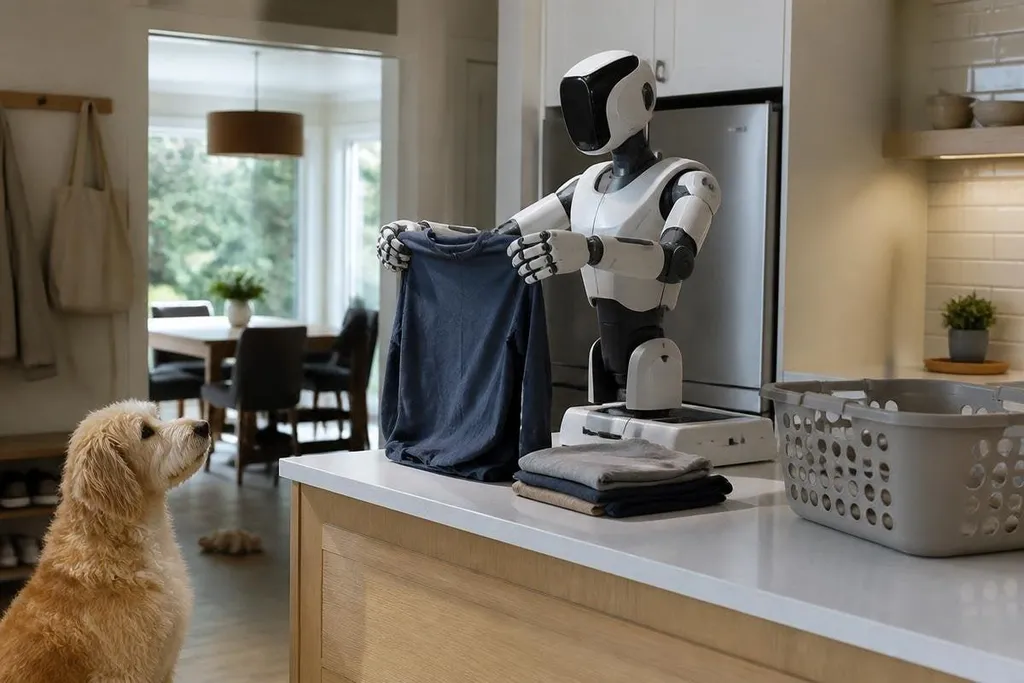
A home robot can fold a shirt in a demo, but daily life asks harder questions: can it find the shirt, avoid the dog, and finish without help? The companies building these machines are competing on useful work, not on how human the robot looks.
- Useful work: A robot must finish a repeatable home task.
- Safe movement: It needs to work around people, pets, stairs, and clutter.
- Clear cost: The price must fit the job it does.
The hard part is the home
Factories give robots fixed floors, known objects, and controlled lighting. Homes change from one minute to the next. A chair moves, a toy lands under a table, and a glass sits near the edge of a counter.
That makes home robotics a problem of sensing and judgment. Cameras, depth sensors, microphones, and touch sensors help a robot build a view of its surroundings. Software then has to decide what it can touch, where it can move, and when it should stop.
The robot also needs to handle tasks that people complete without thinking. Picking up a towel means finding the towel, working out which part to hold, lifting it without dragging nearby objects, and placing it in the right spot. A failure at any step leaves the owner with more work.
The first useful jobs will be narrow
A home robot does not need to do everything to earn its place. It may start with one job that happens often and takes time, such as carrying items between rooms, loading a dishwasher, or moving laundry.
Narrow tasks are easier to test. A company can measure how many tasks the robot finishes, how often it asks for help, and how much time a person spends fixing mistakes. Those numbers tell you more than a short video of a robot completing one clean run.
A robot that needs remote help every few minutes may still work in a research lab. It won't yet work for a family that needs the kitchen cleared before school. The gap sits in recovery: what the robot does after it drops an item, loses track of a room, or meets an object it has not seen before.
A home robot’s price means little until you know the task it can finish without remote help. Robot24.com home robotics coverage can tie a claim to a named machine, test date, and task, so you can see what the purchase actually pays for.
Cost will decide who gets one
The selling price is only one part of the bill. You may also need a charging dock, a service plan, replacement parts, software access, or a technician visit. A low purchase price can look different once those costs enter the household budget.
The job matters just as much. A robot that carries groceries has a different value from one that sorts socks. A machine that saves five minutes a day may be hard to justify, while one that helps a person with limited movement could be useful even with a narrow task list.
I’d wait for clear service terms and task results before buying a general home robot. The hardware may work well, but a repair process that sends the machine away for weeks can end the benefit.
What the race should measure
Public tests need to cover ordinary homes, not only clean rooms prepared for a video. They should also record failures, human help, noise, battery use, and damage to household objects.
A useful report would name the room, task, number of attempts, and amount of remote help. It would say how often the robot stopped, how long a person took to reset it, and which objects caused trouble.
Without those details, two companies can use the same word for very different results.
The strongest home robot may not be the one with the most skills. It may be the one that completes a small set of jobs each day, explains its limits, and asks for help at the right moment.
A practical buying checklist
Before you spend money, check these points:
- Name the task: Write down the job you want finished and how often it happens.
- Count human help: Ask who takes control when the robot fails and how that help is billed.
- Check the test: Look for repeated runs in normal rooms, not one edited demonstration.
- Read service terms: Find the repair price, return window, software fees, and parts policy.
- Watch the stop case: See how the robot reacts to pets, stairs, blocked paths, and dropped objects.
The race will be decided when a home robot can repeat one useful job for weeks, recover from ordinary mistakes, and cost less than the time it saves. Until companies publish those results, the kitchen remains the test that matters.